If you run or are responsible for selling in an online store, you have probably wondered more than once how conversions are carried out. It’s great if each conversion is assigned directly to a specific source. However, in reality, the customer’s shopping journey is not so simple … Customers have different purchasing intentions and are at different stages of their purchasing journey. Going further, we can try to group customers with the same purchasing intention into groups and as such analyse the performance of the transaction. In this article, we’ll focus on thoroughly understanding what attribution is and what attribution models are.
Let’s start with a short example that will help you better understand the customer’s shopping path. Suppose you are the father of 3 children and you are looking for a vacuum cleaner for your apartment. This is your first purchase, so you start with detailed research. Firstly, if you look for articles related to vacuum cleaners, you will learn what vacuum cleaners are characterised by, how powerful it is as well as its suction power. You will find out that there are now standout vacuum cleaners on the market. You will start looking for websites, expert opinions and vacuum cleaner rankings, you will compare prices and differences in parameters.
You are a man aged 25-40, who has 2,000 PLN to spend on new home cleaning equipment 🙂 So, if you already get to know the devices on the market, it’s time to compare the parameters and decide on your desired model, you will start choosing a store which stocks the equipment. The Ceneo.pl price comparison engine or searching for a vacuum cleaner model in the Google advertising network can help you with this. Regardless of which source you make the purchase from, whether it will be: ceneo / referral or google / cpc, you have followed a certain path until the conversion is completed. We can illustrate your shopping path as follows:
Education (blog posts) → Research and model comparison (sponsored articles on industry portals) → Choosing a vacuum cleaner model → Researching the best offer (Price comparison engine or Google) → Conversion.
There can be hundreds, if not thousands, of customer groups and conversion paths. Therefore, in order to better describe and thus understand which point of contact between the customer and the brand is responsible for what share of sales in the store, attribution modelling is used. Thus, we are able to better spend the budget on marketing-related activities, invest in profitable channels of reaching the customer and limit the budget for unprofitable ones.
What is conversion attribution?
The above example illustrates the customer’s shopping path. So, what is attribution in marketing? It is nothing more than monitoring and assigning conversion shares to a specific traffic source. The ideal attribution model distributes the values from different sources of traffic in the store equally and determines their exact share.
Attribution allows you to determine which marketing activities (channels / traffic sources) are bringing results.
So, by introducing attribution models, we want to answer the following questions:
Which marketing activities are most profitable?
Which traffic source should we invest in?
Have recent investments translated into an increase in revenues in the e-store?
Which campaigns and traffic sources are better to switch off to save additional advertising budget?
This is not an easy task, and it rarely happens that the first interaction of the user with the store will lead to a purchase. Especially when we are dealing with a more expensive product, the customer’s purchasing path may turn out to be long and spread over time. It can start from reading the content, by comparing the offer on pages, to direct entry and conversion from remarketing. Therefore, the more points of contact between the customer and the brand, the more difficult it is to model the attribution.
Facebook Ads, Google Ads and Google Analytics attribution
If you’ve ever compared conversions from a Facebook Ads account, Google Ads, you may have noticed that the sum of sales from the Facebook Business and Google Ads ad manager is greater than the analysed actual sum in your Google Analytics account. This is because each ad channel tries to attribute the conversion to itself. The higher the conversion, the more willingly we will spend additional funds on campaigns in a given advertising channel. 🙂
Please note that 2 advertising networks, Facebook Ads and Google Ads, operate independently of each other. Google Ads has no information about the sales results of Facebook Business, and vice versa. So, both ad networks try to attribute as many conversions to each other as possible. The Facebook and Google Ads attribution model assigns a conversion directly to itself if there has been at least one interaction with the ad along the entire shopping path. Hence, as you observed, it may happen that the same conversion gets attributed to the same traffic sources.
How to measure conversion attribution?
Google Analytics and the Multi-Channel Funnels report are most often used to measure attribution, which you can find here:
Conversions → Multi-Channel Funnels → Overview
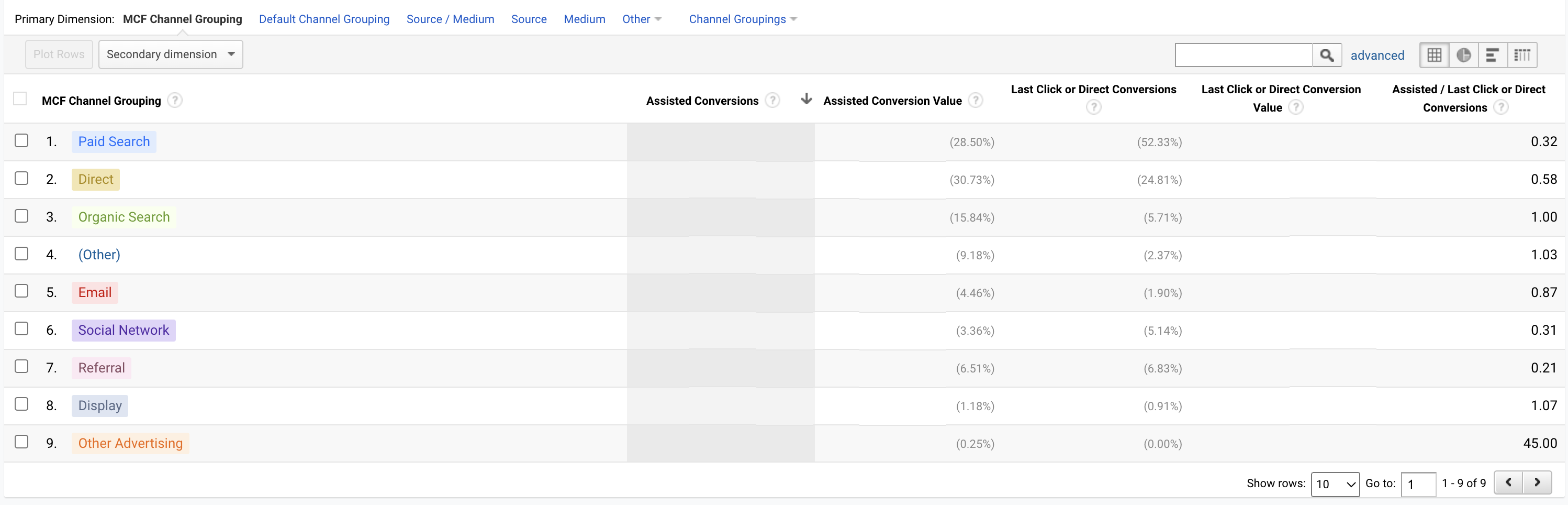
As you can see in the screenshot, the conversion channels overlap. The paid search results channel, which permeates at the same time with direct inputs, has the largest share in the analyzed period. We’ll learn about the proportion of paid search results in relation to the overall conversion in the next report:
Conversions → Multi-Channel Funnels → Assisted Conversions
ECommerce attribution models
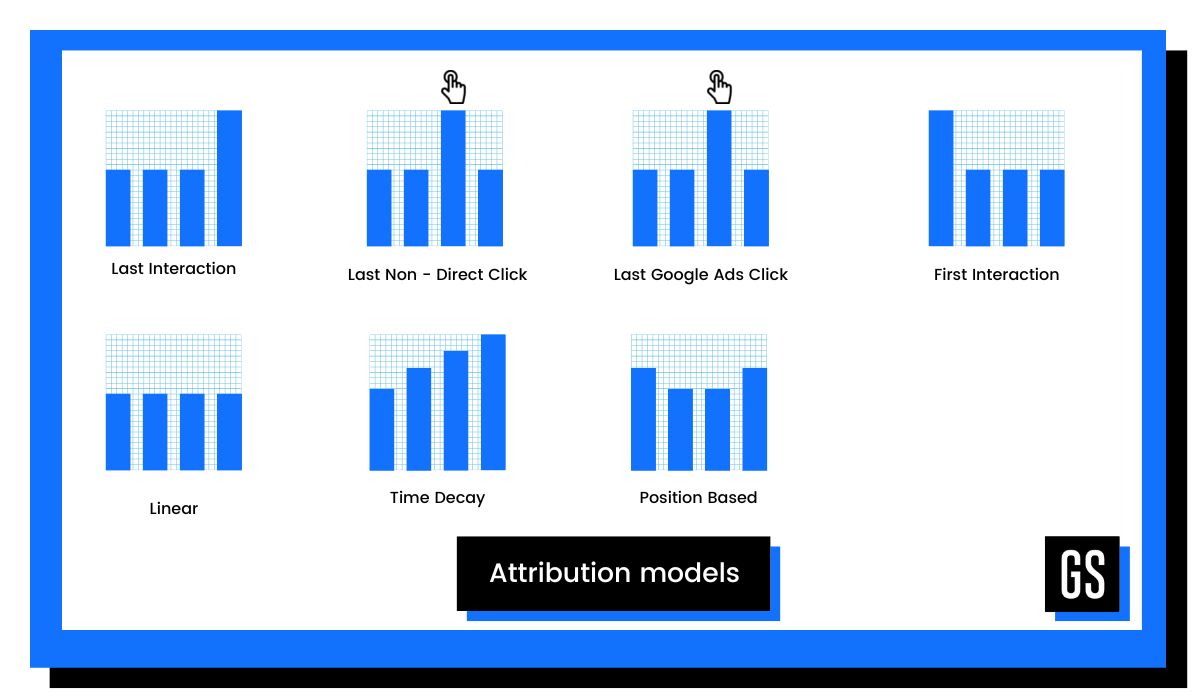
Essentially, attribution models determine which interactions on conversion paths should receive a conversion share, and at which proportion.
The default conversion attribution model in Google Analytics
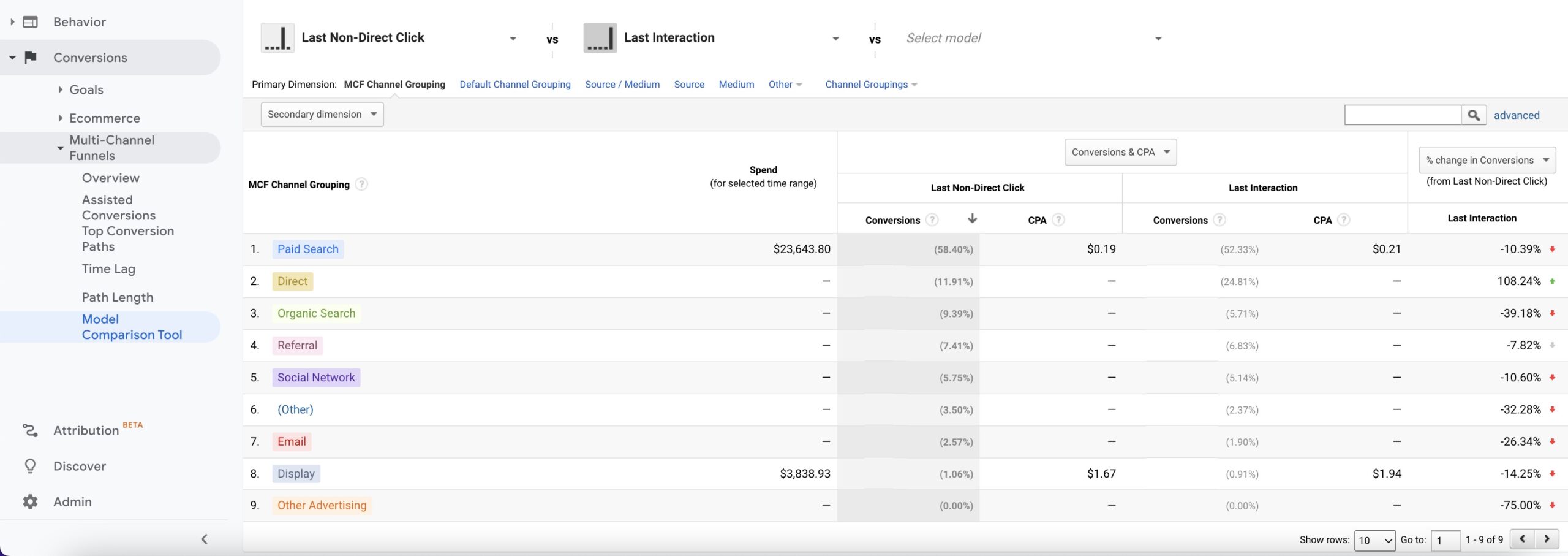
Perhaps you are wondering what is the default attribution model in Google Analytics? The default attribution model in Google Analytics is the Last Non-Direct Click model. This means that the conversion is assigned to the source preceding the direct input. For a better explanation, a few examples:
Example no. 1
The user enters the page from organic search results by entering a phrase into Google. Exits the site and subsequently purchases from the Direct channel. Your purchase will be credited to natural search results.
Example no. 2
The user enters the page from social networks. He exits, then re-enters the store’s website, this time with Direct, and makes a purchase. The purchase will be re-credited to the source of social networks.
Example no. 3
A customer saw and clicked on a PLA Shopping ad on the Google Ads Display Network. He then exited and re-entered the site after 7 days with Direct, purchasing the product being viewed. The conversion will be re-assigned to the source preceding Direct.
Keep that in mind!!
One of the most important things to remember from this article is: The Last Non – Direct Click model is the default form of attribution in Google Analytics. 🙂
Google Analytics allows you to compare attribution models through the report: Conversions → Multi-Channel Funnels → Comparison of Attribution Models
Attribution models – the model of the last interaction
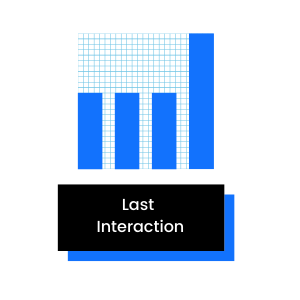
The Last Interaction model allocates 100% of the conversion value to the last channel the customer interacted with before making a purchase or conversion. It also means seeing the advertisement.
When to use? **
The “Last Interaction” model can work when ads and campaigns are designed to grab users’ attention at the time of purchase, or when your business relies heavily on transactions in a sales cycle that ignores the purchase considerations.
Attribution Models – Last Non-Direct Click model
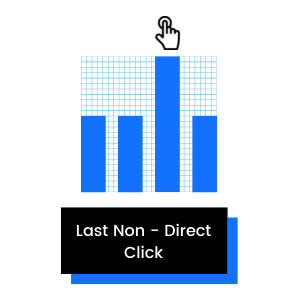
The Last Indirect Click model ignores direct visits and allocates 100% of the conversion value to the last channel the customer clicked on prior to purchasing or converting. This is the default Google Analytics model for assigning conversion credit values in non-MC Funnels reports.
When to apply? **
The Last Non-Direct Click model is used by default in non-MC Funnel reports, so it provides useful benchmarking data to benchmark against other models. Furthermore, if you believe that direct visits are being met by customers who have already been recruited through another channel, you can filter them out and focus on recent marketing activity before conversion.
Attribution models – the Google Ads last click model
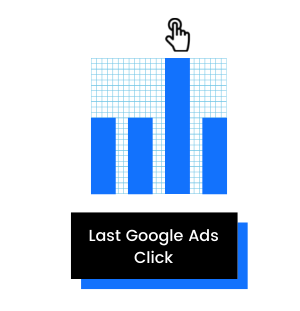
The Google Ads Last Click model attributes 100% of the conversion value to the last Google Ads ad that the customer clicked before purchasing or converting.
When to apply? **
Use this model when you want to identify and attribute the share of Google Ads that generated the most conversions.
Attribution models – the first reaction model
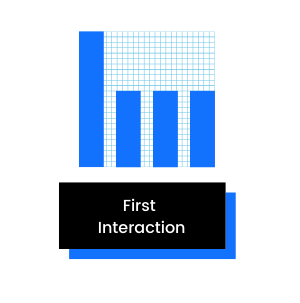
The First Interaction model allocates 100% of the conversion value to the first channel with which the customer interacted.
When to use? **
This model is suitable for advertisers looking to build initial awareness. For example, if your brand is not yet known on the marketplace, you can focus on those keywords or channels that are your first contact with your brand.
Attribution models – linear model
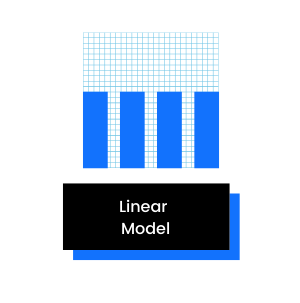
The Linear Model assigns equal contributions to all interaction channels along the way to conversion.
When to use? **
This model is suitable for advertisers who want to stay connected with the customer and maintain brand awareness throughout the sales cycle. In such a situation, each point of contact is equally important to you.
Attribution models – time distribution model
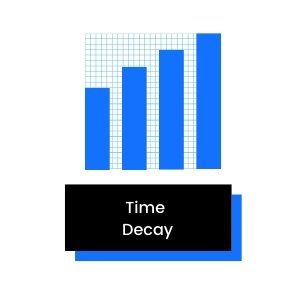
If the sales cycle includes only a short consideration phase, the Timeline model may be appropriate. This model is based on the concept of exponential decay and assigns the largest share to the touchpoints closest to the conversion time. The Time Decay model has a default half-life of 7 days, which means that the touch point 7 days before the conversion will be half the touch point on the conversion date. Respectively, the 14 days earlier touch point will be counted as 1/4 of the touch point on the conversion date. The exponential decline continues throughout the validity period (which is 30 days by default).
When to use? **
If you run one or two days of promotional campaigns, the interactions that happen on promotional days may be more important to you. In this situation, last week’s interactions were of little value compared to touchpoints close to the conversion.
Attribution models – the position-based model
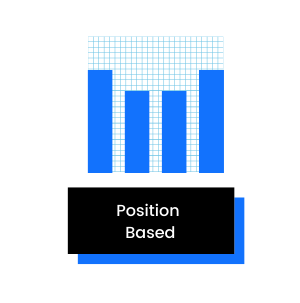
The Position Based model combines the features of the Last Interaction and First Interaction models. Rather than assigning all the credit to the first or last interaction, you can split it up between both types of interaction. One common scenario is assigning 40% to the first and last interactions and 20% to indirect interactions.
When to use? **
Use this model if the most important touch points are the customer’s first contact with the brand and the stage leading to the purchase.
Which conversion attribution model is the best?
Another important point when it comes to modelling conversion attribution is traffic coming to your store page. We must remember that Google Analytics measures traffic in relation to cookies. Thus, if, within one device, the user accesses the same website from 3 different web browsers, the GA detects and assigns 3 different sessions. Only platforms such as Facebook or Twitter, on which we are logged in, regardless of the device, allow the monitoring of Cross-Device transactions. For example, initiating a transaction on a smartphone (displaying an ad), finalising an order from a desktop by clicking remarketing. So, how do I check if attribution modelling makes sense for my online store? If the number of sessions from mobile devices and the number of channels for acquiring traffic on the mobile device is high (close to the desktop or higher than the desktop), it may mean that the results will be distorted and the attribution model will not accurately describe the actual situation.
Damian Ramus describes this mechanism very well; a more detailed explanation of the topic can be found here.
Summary
As you can see, the correct selection of the attribution model and its understanding will help you better understand the behaviour of your customers. The most important points from the article are: The Last Non – Direct Click model is the default form of attribution in Google Analytics. However, if you want to research the relevant channels and traffic sources for your online store, the relevant attribution models we discussed above will help you. The more mobile visits, the less reliable the attribution model.
Knowledge Sources:
* https: //www.damianrams.pl/atrybucja-konwersji/
** https://support.google.com/analytics/answer/1665189
See also categories: Social Media in eCommerce | PPC Campaigns | Shopify technologies | eCommerce SEO | E-mail marketing | eCommerce project management | eCommerce marketing | eCommerce management | eCommerce development | eCommerce b2b | eCommerce automation | eCommerce analytics | Content marketing | Case Study eCommerce | News | Other